
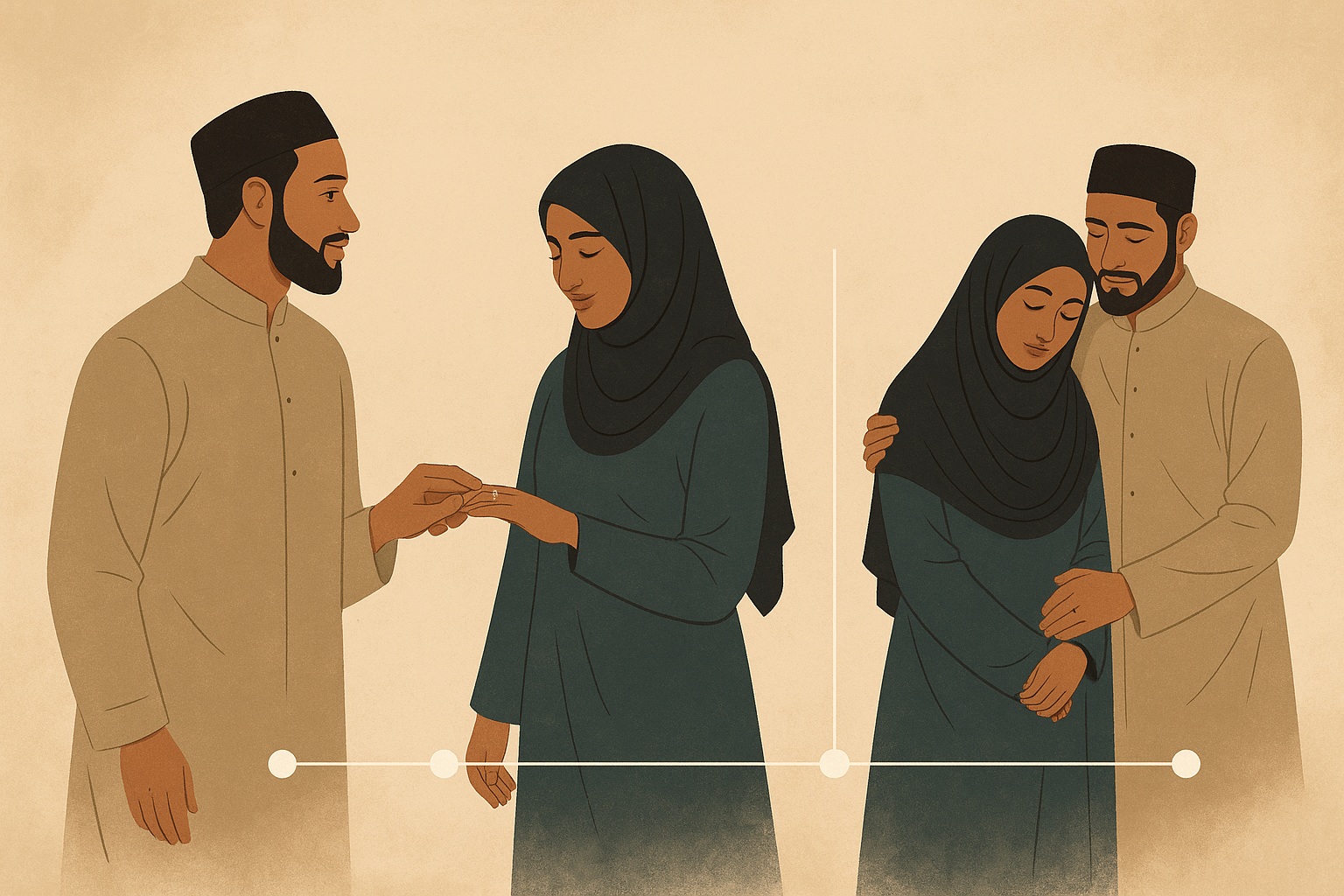
From Match to Nikah: A Purposeful Halal Journey
Why Intentional Structure Matters
Unstructured chatting often drains time, clouds judgment, and opens the door to emotional attachment before clarity. A prophetic, value-driven pathway keeps hearts guarded while allowing genuine assessment. Allah Most High reminds us: “And among His signs is that He created for you spouses from yourselves that you may find tranquility (sakinah) in them, and He placed between you affection (mawaddah) and mercy (rahmah)” (Qur’an 30:21). Tranquility follows intentional steps—never aimless scrolling. This guide defines nine halal milestones moving a serious Muslim seeker from match acceptance toward a sound, witness-ready nikah.
Milestone 1: Stated Intention (Niyyah) & Initial Compatibility Alignment
Before messaging, clarify inwardly and outwardly that the purpose is marriage for the sake of Allah (SWT), not entertainment. Share a concise intention statement (e.g. “Seeking a spouse to build a home of worship, learning, and mutual growth”). The Prophet ﷺ said: “Actions are only by intentions…” (Bukhari & Muslim). Visible clarity reduces ambiguity and curbs casual escalation. At this stage review profile basics: deen practice, location feasibility, marital status authenticity, age band, language capacity, and broad life goals. If glaring non‑negotiables misalign, politely decline early—merciful transparency protects both hearts.
Milestone 2: Guardian / Family Awareness & Ethical Transparency
Early respectful inclusion of a wali or trusted family advisor establishes accountability and prevents secrecy. Classical jurists emphasized wali oversight for a woman’s protection, while also recognizing the importance of consultation (shūrā) for all. Present a succinct profile summary to the guardian: intention, basic biographical info, initial values overlap. If you are a revert or without an immediate wali, seek community scholar direction to appoint a suitable representative. This step signals seriousness and filters unserious suitors. It also frames boundaries for subsequent communication cadence, video introductions, or moderated exchanges.
Milestone 3: Structured First Exchanges (Foundational Questions)
Initial messaging should test foundational alignment—not plunge into emotional sharing. Use modest, purposeful questions grouped under deen practice (obligatory acts consistency, approach to optional worship), daily rhythm (work schedule, prayer at workplace solutions), and character habits (conflict style, patience cues). Keep tone professional yet warm, avoiding flirtatious ambiguity. Limit early chat frequency to prevent premature attachment; scholars caution against prolonged, purposeless conversation, preferring necessity plus benefit. Establish a review pause after several days: do both parties still see viable overlap? If yes, continue. If no, close respectfully with duʿā’ for their success.
Milestone 4: Deeper Value Exploration & Compatibility (Tawāfuq)
Compatibility (tawāfuq) extends beyond surface interests. Probe deeper axes: theological prioritization (core creed adherence), lifestyle (health, media consumption boundaries, social media usage), work–family balance expectations, financial stewardship style (budgeting, saving, sadaqah), and personal growth (Qur’an study aims, community service). Distinguish non‑negotiables (e.g. five daily prayers, permissibility views fundamental to you) from growth areas (communication style refinement) and preferences (hobbies). Document responses neutrally to avoid halo bias. Imam al-Ghazālī highlights that choosing a spouse for dīn and character outweighs transient traits; keep this prophetic weighting central.
Milestone 5: Family / Wali Interactive Engagement
Progressing beyond private dyadic chat, now facilitate guardian interaction: a moderated call including wali questions concerning safety, sincerity, and future planning. Provide summaries of prior discussions so family need not re‑ask basics. The Prophet ﷺ encouraged community oversight to preserve modesty and fairness. Manage expectations: guardians assess protective factors (financial responsibility, emotional steadiness, religious reliability). Candidates should welcome this scrutiny—it strengthens trust reservoirs. If cultural expectations arise (e.g. wedding size, language of household), convert them into clarifying action items rather than vague tension points.
Milestone 6: Practical Due Diligence & Mahr Framework
Move from principle to logistics: share high-level financial transparency (debt categories, general income band, saving strategy) without oversharing sensitive identifiers. Begin preliminary mahr conversation: what is reasonable, customary (ʿurf) in both contexts, and free from extravagance? The Qur’an sanctions the mahr as a gracious gift (4:4), not hardship fuel. Confirm geographic viability (immigration pathways, relocation willingness, time zone permanence), educational/children timing expectations, and health disclosures ethically relevant to married life. Consider a modest spreadsheet for budgeting early married months—preventing later friction.
Milestone 7: Istikhārah & Reflective Pause
After data gathering, pause synchronous communication to perform Salāt al-Istikhārah (the Prophetic prayer of seeking guidance—hadith in Bukhari). Both parties reflect: Are we leaning forward due to principle & compatibility, or emotional momentum? Journal green lights (shared vision of faith growth) and unresolved cautions. Consult trusted, discreet advisors—avoiding public crowd-sourcing that can breed confusion. This sanctified pause honors reliance on Allah while applying the knowledge diligently assembled. Emerging clarity (ease, reaffirmed alignment) encourages advancement; persistent misgivings may signal reevaluation.
Milestone 8: Proposal, Formal Acceptance & Mahr Agreement
With istikhārah reassurance, craft a concise proposal encapsulating intention, shared values, and a preliminary mahr offer (including any deferred portion terms). Ensure guardians witness or are promptly informed. Capture agreed elements in a simple draft contract outline (names, wali identification, mahr components, any mutually agreed stipulations permissible under Shariʿah). Maintain humility; Imam Mālik and others emphasized that blessings accompany moderation and clarity. Avoid transactional tone; focus on partnership in worship and mutual mercy. Once both families acknowledge acceptance, shift communication tone toward logistical preparation rather than exploratory vetting.
Milestone 9: Nikah Planning & Transition Preparation
Finalize witnesses, officiant (where jurisdiction requires), venue simplicity, and documentation (civil registration if legally needed before or after religious ceremony depending on local law). Organize a pre‑nikah expectations session: conflict resolution framework (weekly shūrā meeting agenda), technology boundaries (bedroom device norms), spiritual program (shared Qur’an review cadence), and financial kickoff plan (joint essentials budget, sadaqah goal). Address relocation timeline and initial family visitation etiquette. Draft a 30–60–90 day integration plan: settling housing, adjusting routines, initiating shared worship habits. This structured runway enacts the Qur’anic triad—sakinah, mawaddah, rahmah—rather than waiting passively for harmony to “appear.”
Conclusion: Guarding Hearts While Advancing with Purpose
A disciplined milestone approach channels sincere energy, protects modesty, and accelerates clarity. Each phase intentionally narrows uncertainty while preserving spiritual focus. Where many conversations drift, yours can remain tethered to worship: seeking Allah’s pleasure through truthful speech, equitable expectations, and mutual dignity. Begin applying these milestones now; update your profile fields to reflect intention, activate guardian visibility, and schedule your first structured review. For additional guidance on marriage foundations, visit our Muslim halal matchmaking resource hub. May Allah grant you a spouse who is a garment for you, and you a garment for them (Qur’an 2:187), and place barakah in every step from match to nikah.
Key Takeaways (Quick Recap)
- Niyyah first: Clarify marriage intention before emotional depth.
- Guardian transparency: Early wali inclusion builds trust and boundaries.
- Structured questioning: From fundamentals to deeper tawāfuq dimensions.
- Due diligence: Financial, geographic, and mahr clarity prevent surprises.
- Istikhārah pause: Spiritual reflection tempers emotional bias.
- Contract readiness: Proposal and mahr framed ethically and clearly.
- Transition plan: Post‑proposal structure accelerates sakinah formation.
Implement these milestones intentionally and convert hopeful browsing into a blessed marital reality, bi’idhniLlāh.
Leave a Comment