
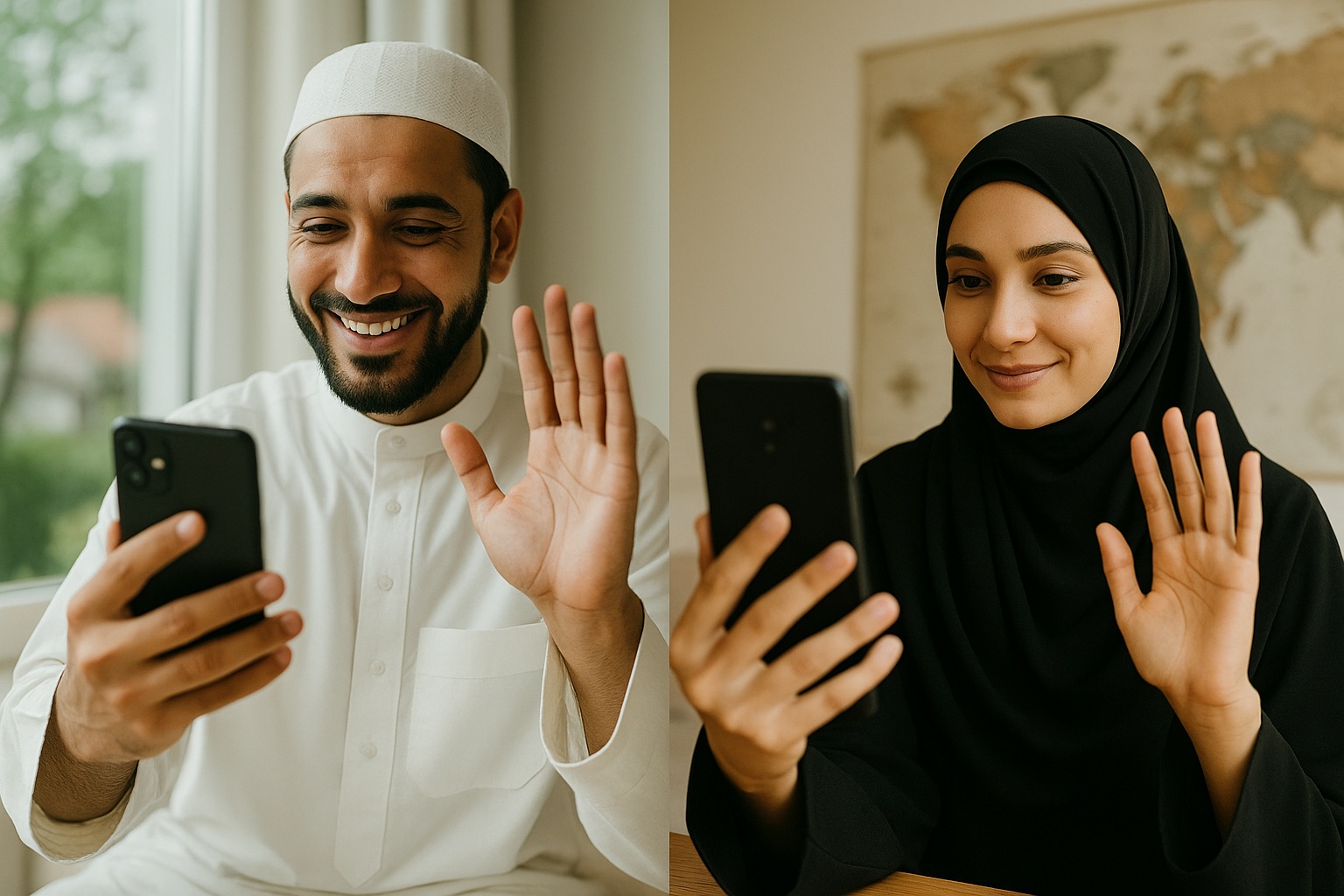
Long-Distance Muslim Matchmaking: A Step-By-Step Framework That Actually Works
“And of His signs is that He created for you from yourselves mates that you may find tranquility (sakinah) in them; and He placed between you affection (mawaddah) and mercy (rahmah).” (Qur’an 30:21). Tranquility, affection, and mercy are not limited by geography. In a global ummah, sincere believers frequently meet across borders—study, work, migration, and diaspora dispersion make long-distance Muslim matchmaking a growing reality. Distance can test patience, but with clear Islamic intention (niyyah), structure, and reliance on Allah (SWT), it can refine character and deepen purposeful communication.
1. Why Distance Is Common Today
Global academic programs, remote careers, refugee resettlement, and multicultural professional hubs mean practicing Muslims often reside far from culturally compatible prospects. Rather than viewing distance as a deficit, reframe it as a filter: only those willing to invest consistent halal effort persist. Imam Ibn al-Qayyim wrote about trials sharpening sincerity; geographical separation, when navigated ethically, purifies motives—are we seeking fleeting excitement or a home built on deen? This perspective reduces impatience and anchors the process in sabr (steadfast patience) and shukr (gratitude).
2. Declaring Shared Intent Early
The Prophet ﷺ said, “Actions are only by intentions.” (Bukhari & Muslim). Both parties should exchange a concise statement: marital intent, approximate timeline (e.g., explore for three months, family introduction by month four), relocation flexibility, and non‑negotiables (deen practice, hijab/ beard expectations, schooling for future children). Present it respectfully—not as a contract, but as a clarity charter. This reduces drift, emotional ambiguity, and the subtle slide into casual chatting. A concise written summary reviewed by a guardian or trusted senior adds accountability. Make du‘a that Allah opens what is khayr (good) and gently closes harmful avenues.
3. Verification & Trust Architecture
Distance magnifies risk of misrepresentation. Establish layered verification without compromising modesty:
- ID & Face Match: Exchange a moderated in‑platform verification (photo/selfie with date sign). Avoid sending personal documents unprotected; use secure verification channels.
- Real-Time Video Introduction: A short, professional‑tone video (proper hijab/modesty) verifies persona. Keep content purposeful; no unnecessary casual banter in early phases.
- Reference Check: With consent, a wali or family member briefly speaks to a same‑gender reference (community volunteer, imam assistant, colleague) to confirm general character—no invasive questioning.
- Consistent Timeline: Deceptive actors struggle to maintain timeline coherence (job dates, city names, prayer times). Spot variance early.
Imam Al-Ghazali emphasized truthful representation (sidq) as foundational to trust (amanah). Documentation plus respectful reference confirmation supports this principle.
4. Structured Communication Cadence
Unstructured, always‑on chatting erodes emotional boundaries and can desensitize to modesty. Design a cadence:
- Phase 1 (Weeks 1–2): Text-based Q&A (values, deen routines, daily schedule). Guardian optionally CC’d or given read access.
- Phase 2 (Weeks 3–5): Weekly video call (20–30 min) + written reflection recap. Introduce a structured questionnaire on life vision.
- Phase 3 (Weeks 6–8): Broaden to family introductions (wali / parents). Discuss initial mahr expectations, relocation, children planning horizon.
- Phase 4 (Decision Window): Istikhārah, consultation, finalize visit plan or respectfully discontinue.
This stepwise path helps hearts remain intentional. Include scheduled breaks for reflection (no chat weekends) to reduce emotional over‑attachment before due diligence.
5. Managing Time Zones & Worship Alignment
Prayer anchors. Share each other’s local salah timetable; schedule calls that do not cut into obligatory prayers. A simple shared calendar noting Fajr to ‘Isha windows ensures no call pressures a partner to compromise worship. Mutual reminders of sunnah fasts (e.g., Mondays/Thursdays) or Qur’an reading reinforce spiritual bonding without imitating marital intimacy prematurely. Regular, brief du‘a for each other’s guidance fosters barakah. Imam An-Nawawi highlights collective supplication’s blessing—invoking mercy for your potential spouse builds a spiritual scaffolding around the process.
6. Planning the First Visit (Halal Logistics)
The first in‑person meeting is a high‑leverage trust event. Principles:
- Guardian / Family Presence: Arrange chaperoned or family‑present settings. The Prophet ﷺ advised: do not isolate (khalwah) unrelated man and woman alone; structure prevents this.
- Neutral, Purposeful Setting: Family living room, modest café with seating visibility, or masjid community area after salah.
- Agenda Preparedness: List unresolved topics (financial planning, relocation timeline, Islamic education for future children) to discuss methodically.
- Visit Length: Short, focused days over sprawling, unstructured weeks. Quality beats quantity; sustained taqwa > prolonged casual exposure.
- Travel Ethics: Sisters should travel with appropriate mahram or adhere to scholarly guidance relevant to their madhhab. Brothers show logistical support (lodging suggestions for family, clear schedules).
Document outcomes: decision points, items requiring scholarly consultation, and a target timeframe for final proposal steps.
7. Cross-Border Legal & Nikah Paperwork
Two layers must align: religious validity (wali, witnesses, mahr, clear offer/acceptance) and civil recognition (marriage license, immigration compliance). Outline early who will relocate. Discuss employment portability, language requirements, and visa categories. A mismatch between assumed and real immigration timelines causes emotional strain. Keep a shared checklist: copies of IDs, proof of single status where needed, immunization or medical tests (some jurisdictions), and mutually agreed mahr documentation (prompt/deferred). Refer to trustworthy scholarly counsel when jurisdictional norms vary; differences in Hanafi vs Shafi‘i perspectives on wali or stipulations can require tailored solutions.
8. Emotional & Spiritual Health Across Distance
Distance can magnify loneliness or accelerate idealization. Signs of unhealthy acceleration: constant need for reassurance, decreased focus on personal ‘ibadah, secretiveness from guardians, or pressure to skip due diligence. Counter-measures:
- Personal Growth Pillars: Maintain worship schedule, exercise, learning circles, family engagement.
- Reflection Windows: Weekly private journaling: intentions status, gratitude list, emerging concerns.
- Istikhārah Practice: Perform sincerely after gathering facts, not as a replacement for research. Imam Ibn Taymiyyah emphasized combining tawakkul with taking the asbāb (means).
- Counsel & Consultation: Seek wali, trusted scholar, or experienced married couple for perspective when ambiguity arises.
Emotional moderation protects from attachment to an illusion rather than a real, mutually assessed individual.
9. Red Flags & Protective Boundaries
Not every discomfort = red flag; some are growth areas. Potential red flags in long-distance context:
- Verification Resistance: Refusal to provide halal identity confirmation.
- Inconsistent Deen Claims: Changing narratives about prayer, hijab/beard, or ‘aqīdah fundamentals.
- Pressure for Premature Private Video Calls or Intimate Topics: attempts to erode modesty boundaries.
- Financial Manipulation: Requests for money under vague pretenses before commitment.
- Isolation Tactics: Discouraging involvement of wali or family, claiming urgency to “lock” the relationship.
Growth areas (not immediate termination): different communication pace, cultural expression differences, language nuance. Approach these with clarifying questions and gentle nasiha (advice). Seek counsel before abrupt decisions; balance husn al-dhann (good opinion) with vigilance.
10. Transforming Distance into Strength
Distance trains patience (sabr), purposeful articulation, and reliance on Allah. Couples who develop clarity frameworks while apart often transition into marriage with stronger communication muscles. Before moving to proposal: review readiness checklist; confirm family alignment; document agreed expectations (religious education of children, financial transparency, relocation deadlines); perform istikhārah; and maintain tawakkul that Allah will facilitate the best outcome. One scholarly maxim states: “What is sought by obedience is maintained by obedience.” Guard the process with halal structure, and the resulting union—if decreed—will enter life on a purified foundation.
Internal Resource: For additional structured guidance on profiles, filters, and community features, visit our Muslim Matrimonial hub and align your next steps with intentional, faith‑centric tools.
Final Supplication: May Allah (SWT) grant you clarity, protect your heart from harm, bless your time zones with synchronized barakah, and unite you upon what pleases Him if this match is good for your dunya and akhirah. Āmīn.
Leave a Comment